
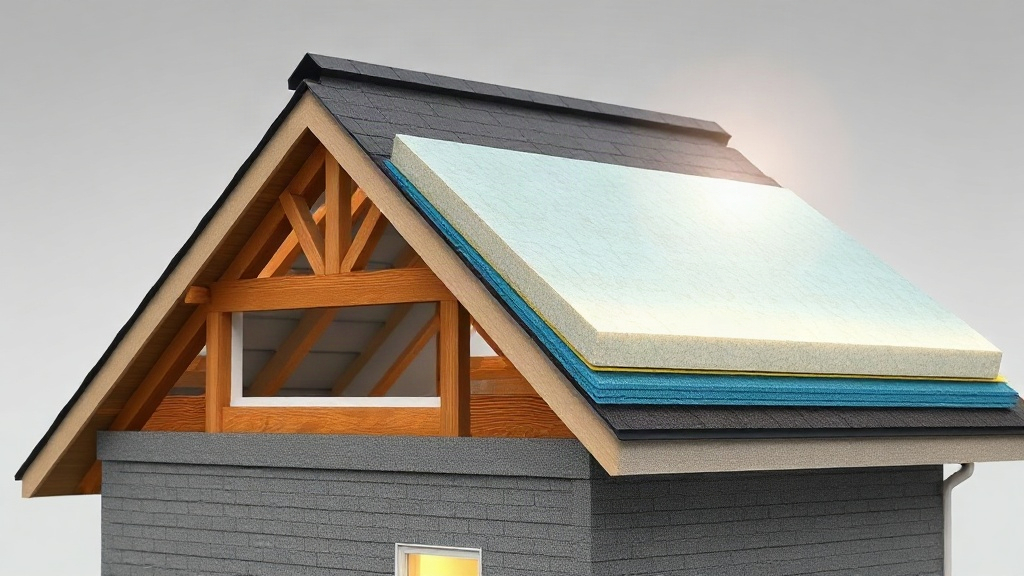
When you're planning a roofing project, getting the insulation right can feel like solving a puzzle. You know you need enough R-value to keep your home comfortable, but how much is enough? A roof insulation calculator takes the guesswork out of the equation. It uses simple inputs like roof area, climate zone, and desired R-value to tell you exactly how much insulation you need. In this guide, we'll walk through how these calculators work, what makes EPS insulation a standout choice for roofs, and how an eps insulation calculator can help you nail your project. Whether you're a DIY enthusiast or a contractor, you'll finish with a clear plan for your next roof insulation job.
Why Roof Insulation Deserves Your Attention
Your roof is one of the biggest culprits for heat loss in winter and heat gain in summer. According to the U.S. Department of Energy, a poorly insulated roof can waste up to 30% of your heating and cooling energy. That's money flying out the window, or rather, through the attic. Proper roof insulation slows down heat transfer, keeping your indoor temperature stable and your HVAC system from overworking. But insulation isn't a one-size-fits-all affair. The right amount depends on your climate, your roof's construction, and the material you choose. That's where a roof insulation calculator becomes indispensable.
How a Roof Insulation Calculator Works
At its core, a roof insulation calculator is a tool that estimates the amount of insulation needed to achieve a target R-value for your roof. R-value measures thermal resistance: the higher the number, the better the insulation. The calculator typically asks for:
- Roof area (in square feet or square meters)
- Desired R-value (based on your climate zone and building codes)
- Insulation type (e.g., EPS, XPS, fiberglass)
- Thickness of insulation material
Once you plug in these numbers, the calculator spits out the total quantity of insulation required, often in board feet or number of panels. Some advanced calculators even estimate energy savings and payback period. The key is to use accurate measurements and local climate data. If you're unsure about your climate zone, check the DOE's climate zone map or ask your local building department.
Why R-Value Matters More Than Thickness
It's tempting to think thicker insulation always means better performance, but R-value tells the real story. Different materials have different R-values per inch. For example, EPS insulation typically has an R-value of about 3.8 to 4.4 per inch, while polyiso can reach R-6 per inch. So a 2-inch EPS board might give you R-8, whereas 2 inches of polyiso could give R-12. A roof insulation calculator accounts for these differences, ensuring you meet your target R-value without overspending on unnecessary thickness. Always check the product's R-value per inch before you buy.
EPS Insulation: A Smart Choice for Roofs
EPS insulation, or expanded polystyrene, is a rigid foam board made from polystyrene beads. It's lightweight, affordable, and effective. For roofing applications, EPS offers several advantages:
- Cost-effective: EPS is generally cheaper than XPS or polyiso, making it a budget-friendly option for large roof areas.
- Moisture resistant: Closed-cell EPS resists water absorption, so it won't lose R-value when exposed to damp conditions.
- Versatile: It comes in various thicknesses and can be cut to fit irregular spaces.
- Eco-friendly: EPS is recyclable and contains no CFCs or HCFCs.
However, EPS has a lower R-value per inch compared to some other foams, so you'll need a thicker board to hit high R-values. That's where an eps insulation calculator becomes handy: it tells you exactly how thick your EPS boards need to be to achieve your desired R-value.
Using an EPS Insulation Calculator
An eps insulation calculator works similarly to a general roof insulation calculator but is tailored to EPS properties. You'll input your roof area, target R-value, and the R-value per inch of your specific EPS product (usually around 4.0). The calculator will then output the required thickness and the number of boards needed. For example, if you need R-30 and your EPS has R-4 per inch, you'll need 7.5 inches of thickness. That might mean two layers of 4-inch boards or one 8-inch board. An eps insulation calculator removes the math anxiety and helps you order the right amount.
Step-by-Step: How to Use a Roof Insulation Calculator
- Measure your roof area. For a flat roof, length times width. For pitched roofs, measure the footprint and adjust for slope, or break it into rectangles and triangles.
- Determine your target R-value. Check your local building codes or DOE recommendations for your climate zone. Typical values range from R-30 in mild climates to R-60 in cold regions.
- Choose your insulation material. If you're leaning toward EPS, note its R-value per inch from the manufacturer.
- Input data into the calculator. Enter area, R-value, and material specs. The tool will compute the total insulation needed.
- Review and adjust. Play with different thicknesses or materials to compare costs and performance.
Remember, a roof insulation calculator is a guide, not a substitute for professional advice. For complex roofs or extreme climates, consult an insulation contractor.
Common Mistakes to Avoid
Even with a calculator, people slip up. Here are pitfalls to watch for:
- Ignoring thermal bridging: Wood framing conducts heat. Use continuous insulation like EPS boards over the entire roof deck to minimize bridging.
- Forgetting ventilation: Insulation and ventilation go hand in hand. Ensure your attic or roof space is properly vented to prevent moisture buildup.
- Using the wrong R-value per inch: Don't assume all EPS is the same. Check the product data sheet.
- Overlooking local codes: Some areas require specific R-values or fire-rated materials. Always verify.
Frequently Asked Questions
How do I calculate the R-value for my roof?
To calculate R-value, multiply the thickness of your insulation (in inches) by its R-value per inch. For example, 2 inches of EPS with R-4 per inch gives R-8. A roof insulation calculator automates this for your entire roof area.
Is EPS insulation good for flat roofs?
Yes, EPS is an excellent choice for flat roofs. Its moisture resistance and compressive strength make it suitable for roof decks, especially when covered with a waterproof membrane. Use an eps insulation calculator to determine the right thickness.
What R-value do I need for my roof?
The recommended R-value depends on your climate zone. The DOE suggests R-30 to R-60 for most attics and roofs. Check local building codes for exact requirements. A roof insulation calculator can help you meet those targets.
Can I use EPS insulation in a cold climate?
Absolutely. EPS performs well in cold climates as long as you install the correct thickness to achieve the required R-value. Just ensure proper ventilation to avoid condensation. An eps insulation calculator will guide your thickness selection.
How accurate are online insulation calculators?
They're quite accurate if you input correct measurements and material data. However, they can't account for every real-world detail like thermal bridging or air leaks. Use them as a starting point, then consult a professional for final specs.
Final Thoughts
A roof insulation calculator is more than a convenience; it's a tool that saves you money and ensures your roof performs as intended. By understanding R-values, choosing the right material like EPS insulation, and using an eps insulation calculator, you can tackle your roofing project with confidence. Whether you're upgrading an old attic or building new, take the time to calculate properly. Your energy bills and comfort level will thank you.