
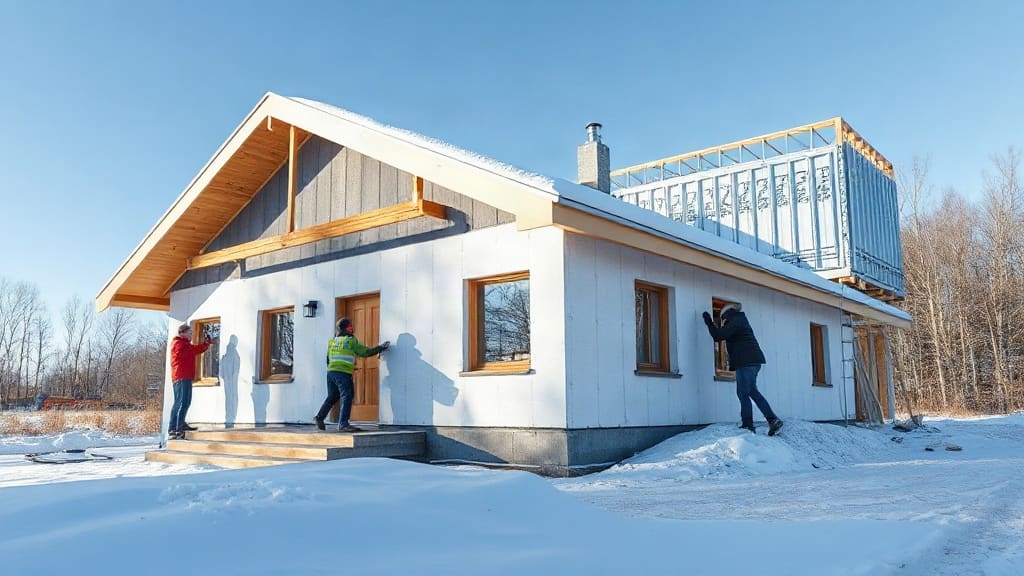
When winter temperatures plunge well below freezing, your home's insulation becomes the frontline defense against heat loss. Among the many options, EPS insulation stands out for its balance of cost, performance, and moisture resistance. But how does it actually hold up in Canada's harsh climate? This guide dives into the specifics, helping you make an informed decision for your next project.
Whether you're retrofitting an older home or specifying materials for a new build, understanding EPS's behavior in cold conditions is key. We'll also explore how it integrates with popular building systems like sandwich panels Canada and insulated roof panels, so you can see the full picture.
What Makes EPS Insulation a Cold-Climate Contender?
Expanded polystyrene (EPS) is a rigid foam board made from tiny beads of polystyrene resin. These beads are expanded using steam and then molded into blocks or sheets. The result is a lightweight, closed-cell structure that traps air, providing excellent thermal resistance. Unlike some other foams, EPS doesn't rely on blowing agents with high global warming potential, making it an environmentally sound choice.
In cold climates, the primary job of insulation is to slow heat transfer from warm interiors to cold exteriors. EPS does this effectively, with R-values ranging from R-3.6 to R-4.2 per inch, depending on density. That means a 2-inch thick EPS board can deliver around R-8, which is substantial for walls and roofs. But R-value alone isn't the whole story; moisture management is equally critical.
Moisture Resistance: The Silent Hero
Cold climates often bring freeze-thaw cycles and snow accumulation, which can lead to moisture intrusion. EPS's closed-cell structure resists water absorption, meaning it won't lose its insulating power when exposed to damp conditions. This is a major advantage over materials like fiberglass, which can become a soggy mess and lose R-value rapidly.
However, EPS is not a vapor barrier. It allows some moisture to pass through, which can be beneficial in assemblies that need to dry. Proper detailing with air barriers and vapor retarders is still essential to prevent condensation within the wall or roof cavity. In Canada, where humidity levels can vary dramatically, this balance is crucial.
EPS Insulation in Canadian Building Systems
Canada's building codes demand high thermal performance, and EPS fits neatly into many common assemblies. Let's look at two popular applications: sandwich panels and insulated roof panels.
Sandwich Panels Canada: EPS as the Core
Sandwich panels Canada are widely used in commercial and industrial buildings for their rapid installation and superior insulation. These panels consist of two rigid facings (often metal) bonded to an insulating core. EPS is a frequent core material because it's lightweight, cost-effective, and provides consistent thermal performance.
In cold Canadian climates, EPS-cored sandwich panels help maintain interior temperatures, reduce heating loads, and prevent thermal bridging. They are particularly popular for cold storage facilities, where maintaining sub-zero temperatures is essential. The panels' tongue-and-groove joints create a continuous insulation layer, minimizing air leakage.
When specifying sandwich panels, pay attention to the density and thickness of the EPS core. Higher density EPS offers better compressive strength and slightly higher R-value. Also, ensure the panels are certified to meet local building codes and fire safety standards. Many manufacturers offer EPS cores with flame retardants to improve fire performance.
Insulated Roof Panels: Keeping Heat In, Snow Out
Insulated roof panels are another critical application. In cold climates, roofs are a major source of heat loss, and they also face the challenge of ice damming. Ice dams form when heat escapes through the roof, melts snow, which then refreezes at the eaves, potentially causing water damage.
EPS insulation helps mitigate this by keeping the roof deck cold, reducing snowmelt. When used in insulated roof panels, EPS provides a continuous layer that eliminates thermal bridging through rafters. This not only improves energy efficiency but also extends the life of the roof by reducing freeze-thaw stress.
For flat roofs, EPS boards can be laid over the deck, followed by a waterproof membrane. For pitched roofs, EPS can be used between and above rafters, or as part of a structural insulated panel (SIP). The key is to ensure proper ventilation and moisture control.
Comparing EPS to Other Insulation Materials
How does EPS stack up against XPS, polyiso, and mineral wool in cold climates? Let's break it down.
- XPS (Extruded Polystyrene): Higher R-value per inch (around R-5) and lower moisture absorption, but more expensive and less environmentally friendly due to blowing agents.
- Polyiso (Polyisocyanurate): Highest R-value per inch (R-6 to R-7), but performance can degrade in cold temperatures. Also more costly.
- Mineral Wool: Excellent fire resistance and soundproofing, but lower R-value per inch and susceptible to moisture if not properly detailed.
- EPS: Good R-value per inch (R-3.6 to R-4.2), excellent moisture resistance, low cost, and eco-friendly. The sweet spot for many cold-climate projects.
While polyiso might seem attractive for its high R-value, its performance drops in extreme cold, making EPS a more reliable choice for Canadian winters. XPS is also a solid performer, but EPS often wins on price and environmental footprint.
Installation Tips for Cold Climates
Proper installation is paramount, especially when temperatures dip. Here are some best practices:
- Acclimate materials: Let EPS boards sit in the building for 24 hours before installation to adjust to indoor conditions. This minimizes expansion and contraction.
- Seal joints: Use compatible tape or foam sealant to fill gaps between boards. Even small gaps can significantly reduce performance.
- Use staggered layers: If installing multiple layers, offset the seams to prevent air leakage paths.
- Protect from UV: EPS degrades when exposed to sunlight. Cover it with siding, roofing, or a protective coating promptly.
- Manage moisture: Ensure proper flashing and drainage. In cold climates, avoid trapping moisture against the EPS.
These steps not only enhance thermal performance but also prolong the life of your insulation system.
Frequently Asked Questions
Does EPS insulation lose R-value in cold temperatures?
Unlike polyiso, EPS maintains its R-value well in cold temperatures. Its closed-cell structure and lack of blowing agents that condense at low temperatures mean performance remains stable even at -20°C and below.
Can EPS insulation be used below grade in Canadian winters?
Yes, EPS is often used for exterior foundation insulation. Its moisture resistance and compressive strength make it suitable for below-grade applications, provided it's protected from physical damage and UV exposure.
How does EPS compare to spray foam for cold climates?
Spray foam offers higher R-value per inch and superior air sealing, but it's more expensive and requires professional installation. EPS is a cost-effective alternative that still delivers excellent performance when installed correctly.
What thickness of EPS do I need for my roof in Canada?
The required thickness depends on your climate zone and building code. In most of Canada, aiming for R-50 in roofs is common, which would require about 12-14 inches of EPS. Consult a local energy advisor for precise calculations.
Is EPS insulation environmentally friendly?
EPS is recyclable and often contains recycled content. It does not use ozone-depleting blowing agents, and its manufacturing process is relatively energy-efficient. However, proper disposal and recycling are important to minimize environmental impact.
By choosing EPS insulation, you're investing in a material that performs reliably in cold Canadian climates, whether used in walls, roofs, or as the core of sandwich panels. With the right installation and detailing, it can help you achieve a comfortable, energy-efficient home or building.