
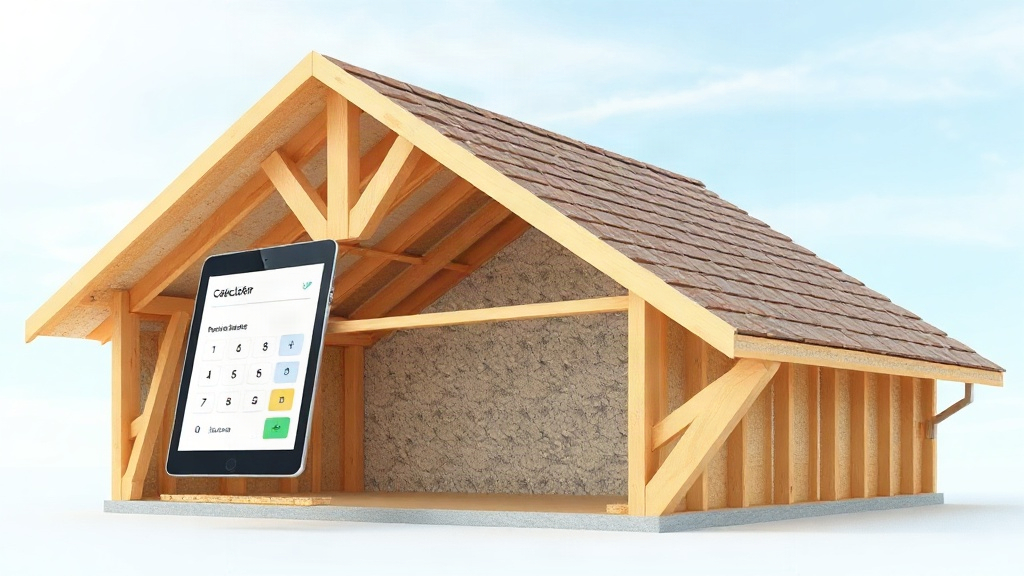
Planning a roof insulation project often starts with good intentions but ends with leftover materials or, worse, a half-insulated roof. The difference between a smooth installation and a costly headache usually comes down to one thing: accurate numbers. A roof insulation calculator removes the guesswork, giving you precise quantities before you spend a dime. Whether you are retrofitting an old attic or specing materials for a new build, understanding how these tools work with EPS insulation will save you time, money, and frustration.
Why You Need a Roof Insulation Calculator
Insulation is not a one-size-fits-all product. Roofs vary in size, pitch, and framing, and insulation requirements change based on climate and building codes. Without a calculator, you risk ordering too little material (causing delays) or too much (wasting money). A roof insulation calculator accounts for these variables and produces a reliable estimate in seconds.
More importantly, it helps you compare options. For example, you might wonder whether to use EPS insulation or a different material. By inputting R-value targets and roof dimensions, the calculator shows you exactly how thickness and quantity change with each choice. That clarity lets you make decisions based on data, not sales pitches.
How EPS Insulation Fits Into the Equation
EPS insulation (expanded polystyrene) is a popular choice for roofs because it is lightweight, moisture-resistant, and affordable. It comes in rigid boards that are easy to cut and install, making it a favorite among DIYers and contractors alike. But EPS boards are not all the same. They vary in density and R-value per inch, which directly affects how much you need.
An eps insulation calculator takes the guesswork out of selecting the right thickness. You simply enter your desired R-value, and the tool tells you the required thickness based on the EPS product you plan to use. This is especially useful when you are trying to meet specific energy codes or qualify for rebates.
Key Factors That Affect Your Calculation
- Roof area: Measure length and width, including overhangs if you plan to insulate them.
- R-value target: Determined by your climate zone and local building codes.
- EPS density: Higher density usually means higher R-value per inch.
- Waste factor: Add 5–10% for cuts and mistakes, especially on complex roofs.
- Board size: Standard sizes like 2x4 feet or 4x8 feet affect how many boards you need.
Step-by-Step: Using a Roof Insulation Calculator for EPS
Most online calculators follow a similar process. Here is how to get the most accurate results.
- Measure your roof area. For a simple gable roof, multiply length by width. For more complex shapes, break the roof into rectangles and triangles, calculate each area, then sum them up.
- Determine your target R-value. Check your local energy code or consult a professional. Common targets range from R-30 to R-60 for roofs, depending on climate.
- Select your EPS product. Look for the R-value per inch on the product datasheet. Typical EPS insulation offers about R-4 per inch, but higher-density versions can reach R-5 or more.
- Enter the data into the eps insulation calculator. It will output the required thickness and the number of boards needed.
- Add a waste factor. Multiply the board count by 1.05 to 1.10 to account for offcuts and errors.
- Review the cost estimate. Many calculators also provide a price estimate based on current material costs, helping you budget accurately.
Common Mistakes to Avoid
Even with a calculator, errors happen. Here are pitfalls to watch for.
- Forgetting to insulate the perimeter. Heat escapes at the edges, so include the full roof area, not just the flat center.
- Ignoring thermal bridging. Wood framing conducts heat. A calculator may not account for this, so consider adding a continuous layer of EPS over the entire roof deck.
- Using the wrong R-value per inch. Always verify the R-value for the specific EPS product you buy. It can vary by manufacturer.
- Skipping the waste factor. It is better to have a few extra boards than to run short mid-project.
- Not checking local codes. Some areas require a minimum R-value or specific installation methods. A calculator is a tool, not a substitute for local regulations.
Tools and Resources for Accurate Calculations
You can find free roof insulation calculator tools online, including on our site. Many manufacturers also offer their own calculators tailored to their products. For the best results, use a calculator that lets you input custom R-values and board dimensions. If you prefer a hands-on approach, a simple spreadsheet can work, but dedicated tools reduce the risk of arithmetic errors.
When using an eps insulation calculator, double-check that the tool uses the same units you are measuring in (feet vs. meters). Unit mismatches are a common source of wildly inaccurate results.
Frequently Asked Questions
How do I calculate the R-value of EPS insulation?
R-value is the thickness of the material divided by its thermal conductivity (k-value). For EPS, typical k-value is around 0.25 BTU·in/(h·ft²·°F), giving roughly R-4 per inch. However, always check the manufacturer's datasheet for the exact R-value of your product.
Can I use a roof insulation calculator for a flat roof?
Yes. Flat roofs are actually easier to calculate because the area is simply length times width. Just remember to account for any parapets or drains that might affect insulation placement.
What thickness of EPS insulation do I need for my roof?
Thickness depends on your target R-value. For example, to achieve R-30 with EPS rated at R-4 per inch, you need 7.5 inches. Use an eps insulation calculator to determine the exact thickness for your specific product and climate.
Does a roof insulation calculator include labor costs?
Most basic calculators only estimate material quantities and sometimes material costs. Labor costs vary widely by region and project complexity, so you will need to get quotes from contractors separately.
Is EPS insulation suitable for all roof types?
EPS works well on most roof types, including flat, low-slope, and pitched roofs. However, it should be covered with a protective layer or roofing membrane to prevent UV damage and physical wear.
Final Thoughts
Getting your roof insulation right starts with accurate measurements and a reliable roof insulation calculator. By understanding how EPS insulation performs and using an eps insulation calculator to fine-tune your material list, you can avoid overspending and ensure your home stays comfortable year-round. Take the time to measure carefully, verify your R-value targets, and always add a little extra for waste. Your future self will thank you.