
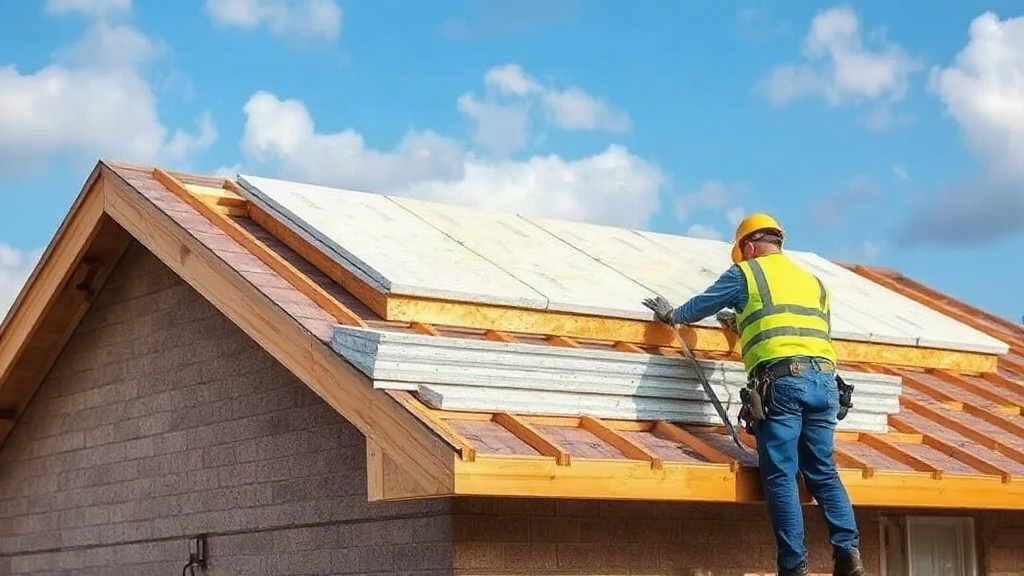
When you're planning a roofing project, the choices can feel endless. But one decision stands out for its impact on comfort, energy bills, and even resale value: the insulation you put above your head. EPS insulation has become a go-to option for many builders and homeowners, and for good reason. It's lightweight, affordable, and when paired with insulated roof panels, it creates a thermal barrier that works hard year-round. Yet, figuring out how much you need and what performance to expect can be tricky. That's where an EPS insulation calculator comes in handy, turning vague estimates into solid numbers.
Why EPS Insulation Deserves a Spot in Your Roofing Plan
Expanded polystyrene, or EPS, is a foam plastic made from tiny beads that are expanded and molded into boards. It's not the fanciest insulation out there, but it delivers reliable thermal performance at a price that won't break the bank. For roofs, EPS shines because it's rigid, moisture-resistant, and easy to cut to fit around vents, skylights, and rafters. Unlike some fibrous materials that can sag over time, EPS holds its shape, keeping its R-value consistent for decades.
Another advantage: EPS is compatible with many roof assemblies. Whether you're insulating a flat roof, a pitched roof, or adding a layer above the deck, EPS boards can be integrated without major structural changes. They're also lightweight, so they don't add significant load to the roof structure, which is a relief for older homes.
Insulated Roof Panels: The Complete Package
If you want to streamline installation, insulated roof panels (often called sandwich panels) combine an insulating core with durable facings, usually metal or oriented strand board. The core can be EPS, polyisocyanurate, or polyurethane. EPS-core panels are popular for their balance of cost and performance. They arrive ready to install, cutting labor time and reducing the chance of gaps that let heat escape.
These panels are especially useful for garages, workshops, sunrooms, and even entire homes in mild climates. They provide a continuous layer of insulation, minimizing thermal bridging through rafters. That continuity is key: even small breaks in insulation can slash overall efficiency. With panels, you get a uniform barrier that helps maintain indoor temperatures and reduces condensation risks.
How EPS Core Panels Compare
EPS core panels typically have an R-value of about 4 per inch of thickness, similar to other foam boards. They're not the highest R-value per inch, but they're cost-effective. For example, a 4-inch EPS panel gives roughly R-16, which is decent for moderate climates. In colder regions, you might opt for thicker panels or a different core material. The choice depends on your climate, budget, and building codes.
Using an EPS Insulation Calculator: No More Guesswork
Guessing insulation thickness is a recipe for either wasted money or a chilly room. An EPS insulation calculator takes the emotion out of it. You input a few details: your climate zone, the area to insulate, the desired R-value, and the type of application (roof, wall, etc.). The calculator then tells you the recommended thickness and the number of boards or panels you'll need.
This is invaluable for DIYers and professionals alike. It prevents over-ordering (which ties up cash) and under-ordering (which stalls the project). Plus, it helps you compare scenarios. What if you bump up to R-30 instead of R-20? The calculator shows the extra thickness required and lets you weigh the cost versus energy savings.
Key Inputs for Accurate Results
- Climate zone: Insulation requirements vary from mild to severe. The calculator uses your location to suggest a baseline R-value.
- Area: Measure the square footage of your roof or the section you're insulating.
- Desired R-value: This is your performance target. Higher R-values mean thicker EPS.
- Panel type: If using insulated roof panels, the calculator may ask for panel dimensions and core thickness.
Once you have these numbers, you can shop with confidence. Many suppliers list EPS boards by thickness and R-value, so you'll know exactly what to order.
Installation Tips for EPS and Roof Panels
Proper installation is just as important as the material itself. Here are some practical pointers:
- Seal gaps: Even tiny gaps between boards can reduce efficiency. Use expanding foam or tape to seal seams.
- Manage moisture: While EPS resists moisture, the roof assembly still needs proper ventilation and waterproofing. Don't skip underlayment or flashing.
- Check local codes: Some areas require specific fire ratings or vapor barriers. Always verify with your local building department.
- Consider professional help: For large or complex roofs, a contractor can ensure correct installation and avoid costly mistakes.
Common Questions About EPS Insulation and Roof Panels
How do I calculate how much EPS insulation I need for my roof?
Start by measuring the roof area in square feet. Decide on a target R-value based on your climate zone. Divide the target R-value by the R-value per inch of EPS (about 4) to get the required thickness in inches. Then, divide the total area by the coverage area of one board (usually printed on the packaging) to find the number of boards. An EPS insulation calculator automates this process and accounts for waste factors.
Can I use EPS insulation in insulated roof panels?
Yes, many manufacturers offer insulated roof panels with EPS cores. These panels are pre-fabricated with the insulation already bonded to the facings, so you just install them as a single unit. They're a time-saver and ensure consistent thickness.
What R-value do I need for my roof?
It depends on where you live. The International Energy Conservation Code (IECC) provides recommended R-values by climate zone. For example, zones 1-2 might need R-30 to R-38, while zones 5-8 might need R-49 or higher. Check with your local building codes for exact requirements.
Is EPS insulation safe for roofs?
EPS is generally safe when installed properly. It's treated with flame retardants to meet fire safety standards. However, it should be covered with a fire-rated material (like gypsum board or metal) in occupied spaces. Always follow manufacturer instructions and local codes.
How does EPS compare to other insulation for roofs?
EPS is cost-effective and moisture-resistant, but it has a lower R-value per inch than polyisocyanurate or polyurethane. For the same thickness, those materials provide more insulation, but they cost more. EPS is a solid choice for budget-conscious projects in moderate climates.