
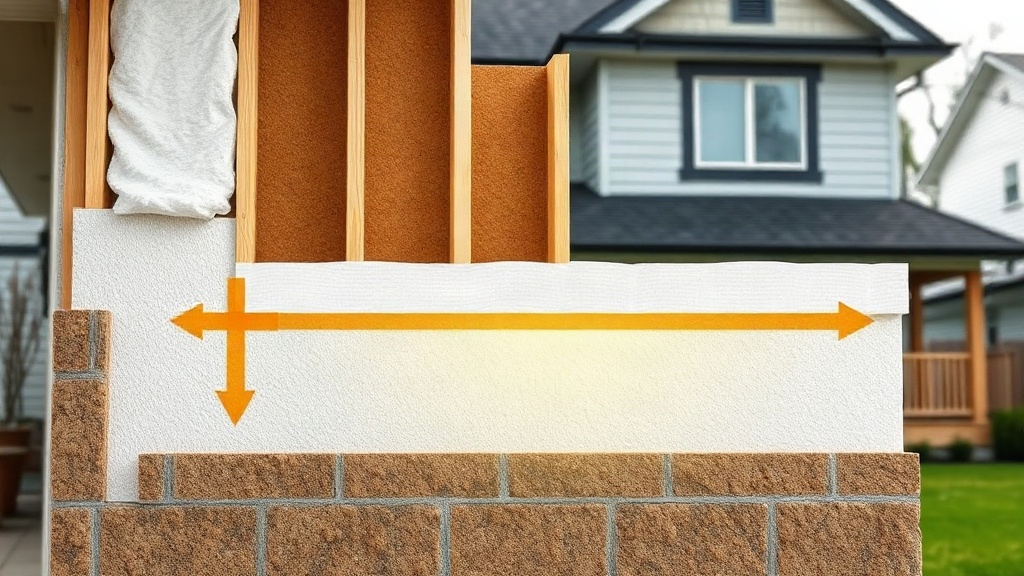
When you're planning a building or renovation, the insulation you choose quietly shapes your energy bills, comfort, and carbon footprint for decades. Among the options, expanded polystyrene (EPS) stands out for its balance of cost, performance, and versatility. But how do you know exactly how much you need and what it will save you? That's where an EPS insulation calculator becomes your best ally. In this article, we'll walk through the essentials of EPS insulation, how to use a calculator to size your project, and why it often outperforms alternatives in real-world scenarios.
What Is EPS Insulation and Why It Matters
EPS insulation is a rigid foam board made from expanded polystyrene beads. It's lightweight, easy to cut, and offers excellent thermal resistance. Unlike extruded polystyrene (XPS), EPS has a slightly lower R-value per inch but costs less and has a lower environmental impact. Its closed-cell structure resists moisture, making it suitable for walls, roofs, and foundations.
Builders and homeowners appreciate EPS for its predictability. It doesn't settle or degrade over time, maintaining its R-value for the life of the building. Plus, it's recyclable and often made with recycled content. Whether you're insulating a new construction or retrofitting an old attic, EPS delivers reliable performance.
R-Value and Thickness: The Core Relationship
The thermal resistance of EPS is measured by its R-value, typically ranging from R-3.6 to R-4.2 per inch. Thicker boards mean higher R-values, but they also cost more and require more space. The key is finding the sweet spot for your climate zone and budget. An EPS insulation calculator helps you determine the optimal thickness by factoring in your local climate, desired indoor temperature, and existing insulation.
For example, in a cold climate like Minneapolis, you might need R-20 in walls, while in a milder climate like Atlanta, R-13 could suffice. The calculator uses your zip code or climate data to suggest the right R-value, then translates that into the thickness of EPS boards you need.
How an EPS Insulation Calculator Works
At its core, an EPS insulation calculator is a tool that estimates the amount of insulation required to achieve a target R-value and calculates potential energy savings. It typically asks for:
- Area to be insulated (square footage)
- Current insulation R-value (if any)
- Desired R-value or target U-factor
- Climate zone or location
- Type of application (walls, roof, floors)
With these inputs, the calculator computes the additional R-value needed and the thickness of EPS required. Many calculators also provide cost estimates based on local material prices and labor rates. Some advanced versions even simulate energy savings over time, giving you a payback period.
Step-by-Step: Using the Calculator for Your Project
Let's walk through a typical scenario. Suppose you're insulating a 1,000-square-foot attic in Denver, Colorado. Your current insulation is R-11, and you want to upgrade to R-49, the recommended level for your area. You open the EPS insulation calculator and enter the area, current R-value, and desired R-value. The tool tells you that you need an additional R-38. Since EPS has an R-value of about 4 per inch, you'll need roughly 9.5 inches of EPS. The calculator then estimates the number of 2-inch boards (each providing R-8) you'll need: about 5 layers. It also gives you a cost estimate and projected annual savings on heating and cooling.
This kind of precise planning prevents overbuying or underinsulating, saving you money and hassle.
Comparing EPS to Other Insulation Materials
EPS isn't the only game in town. Fiberglass, mineral wool, and polyisocyanurate all have their merits. But EPS often wins on cost and moisture resistance. Let's break it down:
- Fiberglass: Cheaper but lower R-value per inch and can irritate skin; loses performance if wet.
- Mineral wool: Excellent fire resistance but heavier and more expensive.
- Polyisocyanurate: Higher R-value per inch but pricier and less eco-friendly.
- EPS: Balanced cost, good R-value, moisture resistant, and recyclable.
For DIYers, EPS is a dream to work with: it cuts with a utility knife, doesn't itch, and fits into irregular spaces easily. For professionals, it's a reliable, code-compliant choice.
When Insulated Roof Panels Make Sense
If you're tackling a roof, especially a flat or low-slope roof, insulated roof panels can be a game-changer. These panels combine a structural deck, insulation, and sometimes a waterproof membrane in one product. They save time on installation and ensure consistent insulation coverage. EPS is often the core insulation in these panels because of its lightweight and moisture-resistant nature.
Using an EPS insulation calculator for roof panels is slightly different: you need to account for the panel thickness and the desired R-value. Many manufacturers provide calculators specific to their panels, but the principle remains the same. The calculator will tell you the required panel thickness and the number of panels needed based on your roof area.
One homeowner in Portland, Oregon, used insulated roof panels with EPS core to upgrade his 1,500-square-foot home. The calculator recommended 6-inch panels (R-24). After installation, his energy bills dropped by 30%, and the payback period was just over four years. That's the power of informed decision-making.
Maximizing Savings: Tips from the Field
Insulation is only as good as its installation. Even the best calculator can't compensate for gaps, compression, or thermal bridging. Here are some practical tips:
- Seal all gaps with spray foam or caulk before installing EPS boards.
- Use two layers of thinner boards with staggered seams to reduce air leakage.
- Ensure proper ventilation in attics to prevent moisture buildup.
- Consider adding a radiant barrier in hot climates for extra performance.
- Check local building codes for required R-values and fire ratings.
Also, don't forget the environmental impact. EPS insulation can reduce your carbon footprint by lowering energy consumption. Over a 50-year lifespan, the energy saved far outweighs the embodied carbon of the material.
Common Pitfalls to Avoid
Many DIYers make the mistake of compressing EPS to fit tight spaces. Compression reduces R-value. Always cut to fit without squeezing. Another pitfall is ignoring air sealing; insulation alone won't stop drafts. Finally, don't rely solely on the calculator's default settings; input accurate data for your specific situation.
Frequently Asked Questions
How accurate is an EPS insulation calculator?
Most calculators provide a good estimate, but accuracy depends on the inputs. Factors like air leaks, thermal bridging, and real-world weather variations can affect actual performance. Use the calculator as a guide, and consult a professional for critical projects.
Can I use EPS insulation in a basement?
Yes, EPS is suitable for basements, especially when covered with a fire-rated material like drywall. It resists moisture, but ensure proper drainage and waterproofing to prevent long-term issues.
What thickness of EPS do I need for R-13?
Since EPS typically has an R-value of about 4 per inch, you'll need roughly 3.25 inches. However, thicknesses are usually sold in 1-inch increments, so you might choose 3.5 inches to achieve R-14.
Is EPS insulation environmentally friendly?
EPS is recyclable and often made with recycled content. It has a lower global warming potential than some foam insulations. However, it is petroleum-based, so consider its lifecycle when making a choice.
How does EPS compare to spray foam?
Spray foam offers higher R-value per inch and superior air sealing, but it's more expensive and requires professional installation. EPS is more budget-friendly and DIY-friendly, though it may need additional air sealing.