
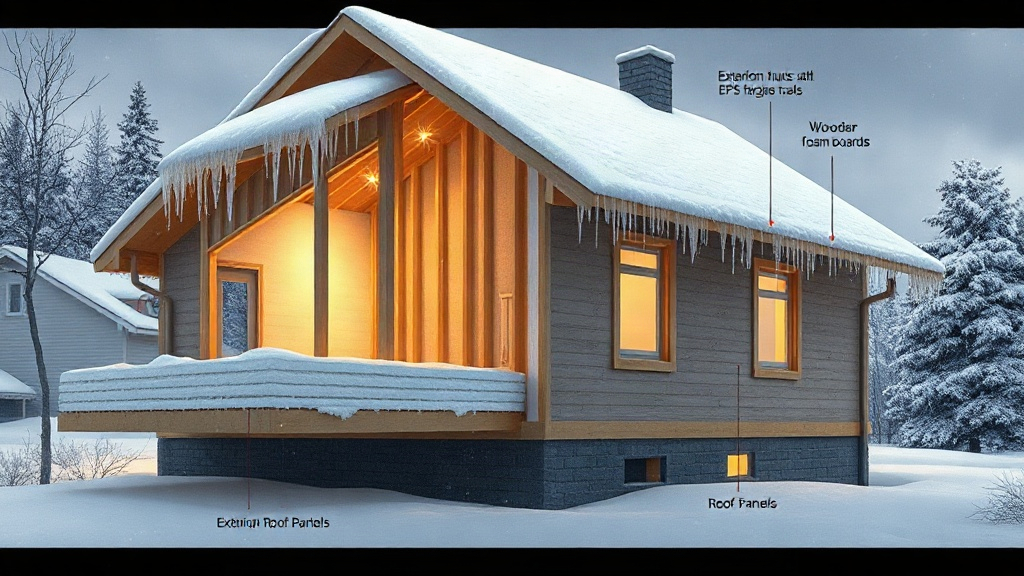
When winter temperatures plunge well below freezing, your home's insulation becomes the frontline defense against heat loss. Among the many options, EPS insulation stands out for its balance of cost, performance, and versatility. But how does it actually hold up in cold climates, especially in regions like Canada where winters are long and harsh? This guide dives into the practical aspects of using EPS in low-temperature environments, helping you make an informed decision for your next insulation project.
What Is EPS Insulation and Why It Works in the Cold
EPS, or expanded polystyrene, is a rigid foam board made from polystyrene beads expanded with steam and molded into various shapes. Its closed-cell structure traps air, creating a barrier that resists heat flow. Unlike some materials that lose R-value in cold temperatures, EPS maintains its thermal performance remarkably well. In fact, studies show that EPS retains over 90% of its R-value at temperatures as low as -20°C (-4°F). This makes it a reliable choice for Canadian winters.
Another key advantage is moisture resistance. EPS doesn't absorb water, so it won't degrade or lose insulation value if exposed to damp conditions. In cold climates, where freeze-thaw cycles can wreak havoc on building materials, this durability is crucial. Whether you're insulating a basement, exterior walls, or a roof, EPS provides consistent performance without the risk of mold or rot.
R-Value and Thickness: What You Need to Know
EPS typically has an R-value of about 3.6 to 4.0 per inch, depending on density. For colder regions, you'll need a thicker board to achieve the same R-value as higher-performing materials like polyisocyanurate (polyiso). However, EPS remains cost-effective because the price per R-value is often lower. For example, to reach R-20, you'd need approximately 5 inches of EPS (at R-4 per inch), whereas polyiso might require only 3.5 inches. The trade-off is thickness versus cost. If space isn't a constraint, EPS offers excellent value.
How EPS Insulation Performs in Canadian Winters
Canada's climate poses unique challenges: extreme cold, high winds, and significant snow loads. EPS insulation has been used successfully in Canadian construction for decades. Its closed-cell structure resists wind-driven moisture, and it doesn't lose R-value as temperatures drop. In fact, EPS outperforms extruded polystyrene (XPS) in cold conditions because XPS can lose up to 30% of its R-value at low temperatures due to its blowing agent. EPS, being air-filled, remains stable.
For homeowners in provinces like Ontario, Quebec, and the Prairies, EPS is a smart choice for exterior insulation. It can be installed on the outside of wall sheathing, providing a continuous layer that reduces thermal bridging. When combined with other insulation types, such as fiberglass batts in stud cavities, EPS creates a high-performance building envelope.
Comparing EPS to Other Insulation Materials
Let's break down how EPS stacks up against common alternatives in cold climates:
- XPS (Extruded Polystyrene): Higher R-value per inch (R-5) but loses performance in cold and is more expensive. EPS is more stable and budget-friendly.
- Polyiso: Higher R-value (R-6 to R-7 per inch) but also loses some R-value in cold. It's pricier and often used where space is tight.
- Mineral Wool: Excellent fire and sound resistance, but heavier and more expensive. EPS is lighter and easier to handle.
- Spray Foam: High R-value and air sealing, but costly and requires professional installation. EPS boards are DIY-friendly.
For Canadian homeowners, EPS offers a sweet spot: reliable performance, moisture resistance, and affordability. It's no wonder it's a top choice for sandwich panels canada applications, where EPS is often used as the insulating core between metal skins.
Applications of EPS Insulation in Cold Climates
EPS is versatile and can be used in various parts of a home. Here are the most common applications:
Exterior Walls
Adding EPS rigid foam to exterior walls is a popular retrofit strategy. It provides continuous insulation, reducing heat loss through studs. For new construction, EPS can be integrated into wall assemblies, such as in sandwich panels canada systems, where it serves as the core insulation between two metal faces. These panels are pre-fabricated and offer fast installation, making them ideal for Canada's short building season.
Insulated Roof Panels
Roofs are a major source of heat loss. Using insulated roof panels with EPS cores can significantly improve energy efficiency. These panels are typically made of EPS sandwiched between metal or plywood skins, providing both insulation and structural rigidity. They are especially useful for flat roofs, where traditional insulation might be compressed or exposed to moisture. EPS's moisture resistance ensures long-term performance, even under snow and ice.
Basements and Crawl Spaces
EPS is an excellent choice for basement insulation because it resists moisture and doesn't support mold growth. It can be applied directly to concrete walls, either on the interior or exterior. For exterior applications, EPS boards are often covered with a protective membrane and backfill. In cold climates, insulating basement walls with EPS can raise the effective R-value of the whole assembly and reduce the risk of condensation.
Installation Tips for Cold Climates
Installing EPS in cold weather requires some precautions. The material becomes more brittle at low temperatures, so handle it carefully to avoid breakage. Ideally, store EPS boards in a heated space until installation. When cutting, use a fine-toothed saw or a hot wire cutter for clean edges. Ensure that seams are tight and sealed with tape or foam sealant to prevent air leakage.
For exterior applications, apply EPS over a weather-resistant barrier (WRB) and fasten it with cap nails or screws. In very cold climates, consider using a thicker board to compensate for thermal bridging. If you're installing insulated roof panels, make sure the panels are designed for your snow load requirements. Consult local building codes for minimum R-values and installation standards.
Frequently Asked Questions
Does EPS insulation lose R-value in cold weather?
No, EPS maintains its R-value well in cold temperatures. Unlike XPS, which can lose up to 30% of its R-value at -20°C, EPS retains over 90% of its rated R-value. This makes it a reliable choice for Canadian winters.
Can EPS insulation be used in sandwich panels for Canadian homes?
Yes, EPS is a common core material in sandwich panels canada due to its excellent insulation properties, moisture resistance, and cost-effectiveness. These panels are widely used for walls and roofs in residential and commercial buildings.
How thick should EPS insulation be for a cold climate roof?
The required thickness depends on your target R-value and local building codes. In Canada, roofs typically need R-40 to R-60. With EPS at R-4 per inch, you'd need 10 to 15 inches. However, using insulated roof panels with EPS cores can achieve high R-values with less thickness because the panels often include other insulating layers.
Is EPS insulation environmentally friendly?
EPS is recyclable and can be reused. It has a lower environmental impact compared to some other foam insulations because it doesn't use ozone-depleting blowing agents. However, it is petroleum-based, so consider using recycled EPS or combining it with eco-friendly materials.
Can I install EPS insulation myself?
Yes, EPS boards are lightweight and easy to cut, making them DIY-friendly. However, for exterior applications, ensure proper fastening and sealing. If you're unsure, consult a professional to avoid mistakes that could compromise performance.
EPS insulation is a proven performer in cold climates, offering reliable thermal resistance, moisture durability, and affordability. Whether you're retrofitting an existing home or building new, consider EPS for your next project. With the right installation, it can keep your home warm and energy-efficient for years to come.