
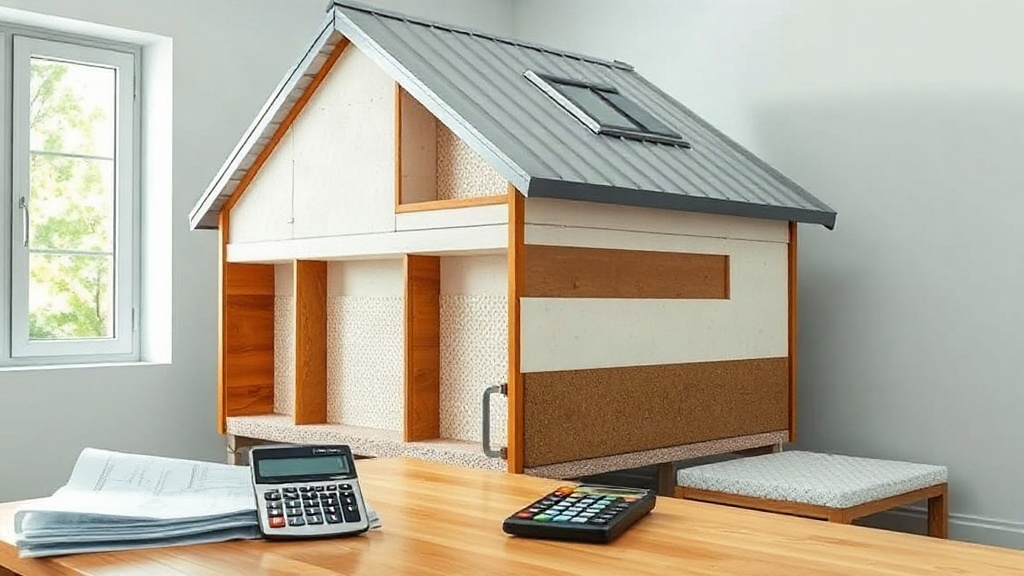
If you're planning a renovation or building a new home, you've likely encountered the term EPS insulation. Expanded polystyrene (EPS) is a lightweight, rigid foam board that's become a go-to choice for energy-conscious builders. But what makes it so popular, and how do you determine the right thickness for your project? This guide breaks down the essentials, from R-values to real-world applications, and shows you how to use an EPS insulation calculator to make informed decisions. We'll also touch on insulated roof panels, a related solution that can dramatically cut heating and cooling costs.
What Is EPS Insulation and Why Does It Matter?
EPS insulation is made from polystyrene beads that are expanded with steam and molded into rigid panels. The result is a material that is about 98% air, making it an excellent insulator. Its closed-cell structure resists moisture, and it maintains its thermal performance over time. Unlike some other foams, EPS doesn't use ozone-depleting blowing agents, making it an environmentally friendlier option.
But why should you care? Because heating and cooling account for a significant portion of your energy bills. Proper insulation reduces heat transfer, keeping your home warmer in winter and cooler in summer. EPS is versatile: it can be used in walls, roofs, and floors. It's also affordable and easy to install, which is why it's a staple in both residential and commercial construction.
Understanding R-Value and EPS Performance
R-value measures thermal resistance. The higher the R-value, the better the insulation. EPS typically has an R-value of about 3.8 to 4.4 per inch of thickness. This varies slightly depending on density and manufacturer. For example, a 1-inch thick EPS board might have an R-value of 4.0.
To achieve a specific R-value, you need to stack or choose the appropriate thickness. For instance, if you need R-20, you'd require about 5 inches of EPS (since 5 x 4 = 20). However, other factors like framing, thermal bridging, and air leaks can affect overall performance. That's where an EPS insulation calculator comes in handy.
How to Calculate EPS Insulation Needs
An EPS insulation calculator simplifies the process of determining how much insulation you need. It considers your target R-value, the R-value per inch of your chosen EPS product, and the area to be insulated. Here's a simple formula:
- Determine your desired total R-value (based on climate zone and building codes).
- Find the R-value per inch of your EPS (e.g., 4.0).
- Divide total R-value by R-value per inch to get required thickness in inches.
- Multiply thickness by area to estimate board feet or number of panels.
For example, if you need R-30 and your EPS has R-4 per inch, you need 7.5 inches of thickness. If your wall area is 1,000 square feet, you'll need about 625 board feet (7.5 x 1000 / 12). An online calculator can do this instantly and even account for waste and cuts.
EPS Insulation vs. Other Insulation Materials
How does EPS stack up against fiberglass, mineral wool, or polyisocyanurate? Each has pros and cons. Fiberglass is cheaper but can irritate skin and lungs during installation; it also loses R-value when compressed. Mineral wool offers fire resistance and soundproofing but is heavier and more expensive. Polyisocyanurate (polyiso) has a higher R-value per inch (around 6.5) but costs more and can be harder to find.
EPS shines in terms of cost-effectiveness, moisture resistance, and ease of handling. It's also recyclable in some areas. However, it has a lower R-value per inch than polyiso, so you might need thicker boards to achieve the same performance. For many DIYers and contractors, the trade-off is worth it.
Where to Use EPS Insulation
EPS is incredibly versatile. Common applications include:
- Exterior walls: As rigid foam board over sheathing, it reduces thermal bridging through studs.
- Roofs: Under shingles or as part of a flat roof assembly, it keeps heat from escaping.
- Foundations: It protects against frost heave and keeps basements warmer.
- Interior walls: In basements or garages, it adds an extra layer of insulation.
One popular trend is using EPS in conjunction with insulated roof panels. These panels typically consist of an insulating core (often EPS or polyurethane) sandwiched between two metal or wood skins. They provide excellent thermal performance and are quick to install, making them ideal for retrofits and new builds.
Insulated Roof Panels: A Complementary Solution
Insulated roof panels are a game-changer for energy efficiency, especially in attics and cathedral ceilings. They combine structural strength with high R-values, often ranging from R-15 to R-40 or more. Unlike traditional insulation that is installed between rafters, these panels cover the entire roof surface, eliminating thermal bridging and reducing air leaks.
When paired with EPS insulation, you can achieve superior performance. For example, you might use EPS boards between rafters and then cover them with insulated roof panels for a continuous thermal envelope. This approach is common in passive house designs and energy-efficient retrofits.
Calculating Savings with Insulated Roof Panels
To estimate savings, you need to know your current energy consumption and the R-value improvement. An EPS insulation calculator can help you compare scenarios. For instance, upgrading from R-10 to R-30 in your roof could cut heating costs by 20-30%, depending on your climate. Many utilities offer rebates for insulation upgrades, so check local incentives.
Installation Tips for EPS Insulation
Proper installation is key to maximizing performance. Here are some best practices:
- Seal gaps: Use spray foam or caulk to fill gaps between boards and around penetrations.
- Use the right fasteners: Cap nails or screws with washers are recommended for EPS.
- Add a weather barrier: House wrap or building paper protects EPS from moisture and UV.
- Don't compress: Compressing EPS reduces its R-value. Ensure it fits snugly without being squeezed.
- Consider fire code: EPS should be covered with a fire-rated material like drywall in interior applications.
If you're using insulated roof panels, follow manufacturer instructions carefully. These panels often require specific clips and sealants to maintain their thermal integrity.
Frequently Asked Questions
What is the R-value of EPS insulation per inch?
EPS typically has an R-value of 3.8 to 4.4 per inch. The exact value depends on density; higher density generally means higher R-value. Always check the product data sheet for precise ratings.
How do I calculate how much EPS insulation I need?
Use an EPS insulation calculator or the formula: total R-value divided by R-value per inch gives thickness. Multiply by area to get board feet. Add 5-10% for waste.
Can EPS insulation be used in roofs?
Yes, EPS is commonly used in roof assemblies, either as rigid boards under shingles or as part of insulated roof panels. It helps reduce heat loss and prevents ice dams.
Are insulated roof panels worth the cost?
They can be, especially if you need high R-values and want to minimize thermal bridging. They also speed up installation, saving labor costs. Calculate your potential energy savings to determine payback period.
Does EPS insulation lose R-value over time?
EPS is stable and does not significantly lose R-value over time, unlike some foams that off-gas. Its closed-cell structure resists moisture, which helps maintain performance.
By understanding EPS insulation and using tools like an EPS insulation calculator, you can make smart decisions for your project. Whether you're insulating walls or considering insulated roof panels, the right approach will keep your home comfortable and your energy bills low.