
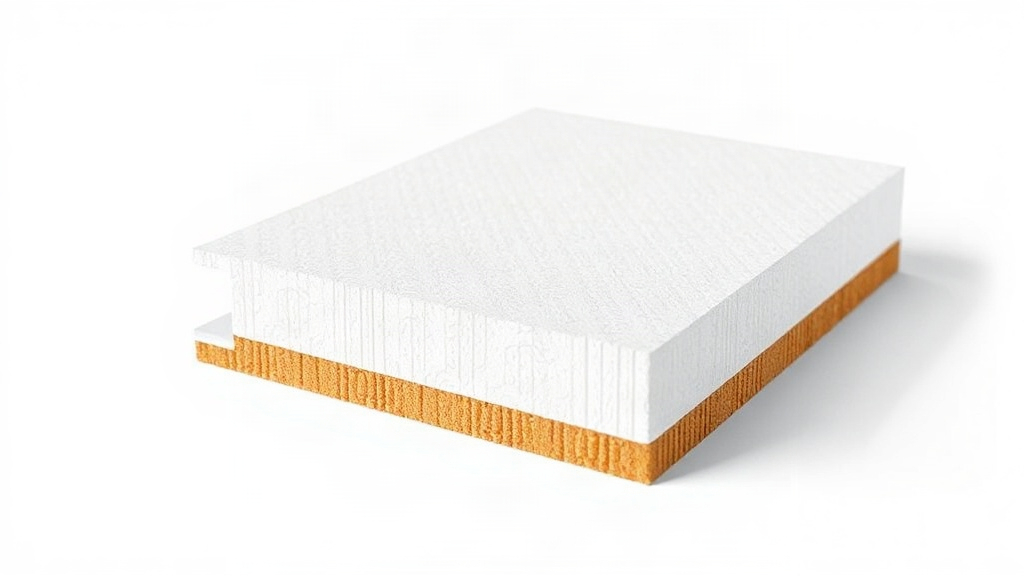
When you're planning a building project, whether it's a new commercial warehouse or a home renovation, the roof plays a critical role in energy performance and structural integrity. EPS insulation has become a go-to material for modern roof systems because it offers an excellent balance of thermal resistance, affordability, and ease of use. In this guide, we'll dive into insulated roof panels that use an EPS core, explaining why they're gaining popularity across Canada and how you can make informed decisions for your next project.
What Are Insulated Roof Panels with EPS Core?
Insulated roof panels are composite building elements that combine a rigid insulation core with structural facings, typically metal or oriented strand board (OSB). When the core is made of expanded polystyrene (EPS), you get a lightweight yet strong panel that provides continuous insulation across the entire roof surface. Unlike traditional batt insulation, which can leave gaps and thermal bridges, EPS-cored panels create a seamless thermal envelope.
EPS itself is a closed-cell foam made from expanded polystyrene beads. It's known for its consistent R-value per inch (around R-4 per inch at 75°F), moisture resistance, and ability to maintain performance over time. These panels are prefabricated in controlled factory conditions, ensuring uniform density and thickness, which translates to predictable energy savings.
Why Choose EPS-Cored Insulated Roof Panels?
There are several compelling reasons to consider EPS-cored panels for your roof:
- Thermal efficiency: EPS provides a continuous layer of insulation, minimizing heat loss in winter and heat gain in summer. This can lead to significant reductions in HVAC costs.
- Lightweight: EPS is much lighter than polyisocyanurate or mineral wool, making panels easier to handle and install, potentially reducing labor costs and structural load.
- Moisture resistance: EPS doesn't absorb water readily, so it retains its insulating properties even in damp conditions. Proper detailing of joints further enhances moisture control.
- Cost-effective: EPS is generally more affordable than other rigid foam insulations, offering a high return on investment for energy-efficient construction.
- Versatility: These panels can be used in low-slope and steep-slope roofs, and they're compatible with various roofing membranes, including metal, TPO, and EPDM.
In Canada, where temperature extremes are common, the benefits of continuous insulation are particularly pronounced. Building codes like the National Energy Code for Buildings (NECB) increasingly emphasize thermal performance, and EPS-cored panels can help meet those requirements.
Key Considerations When Selecting Insulated Roof Panels
Not all insulated roof panels are created equal. Here's what to evaluate:
R-Value and Thickness
The R-value indicates thermal resistance. EPS typically offers R-4 per inch, so a 4-inch panel provides about R-16. However, you need to consider the overall assembly R-value, including facings and any additional insulation. For Canadian climates, aim for R-30 or higher in roofs, which may require thicker EPS or hybrid systems.
Core Density
EPS density affects compressive strength and dimensional stability. Standard densities range from 1.0 to 2.0 lb/ft³. Higher density offers better load-bearing capacity, which is important for roofs subject to snow loads or foot traffic during maintenance.
Facings and Finishes
The facings provide structural integrity and a surface for attachment. Common options include:
- Galvanized steel: Durable, weather-resistant, and available in various profiles.
- Aluminum: Lightweight and corrosion-resistant, ideal for coastal areas.
- OSB: Provides a nailable surface for shingles or other roof coverings.
Consider the roof covering you plan to use and ensure compatibility with the panel's facing.
Fire Performance
EPS contains flame retardants, but it's still combustible. Check local fire codes and look for panels with appropriate fire ratings, especially for commercial buildings. Some panels include fire-resistant barriers or are tested as part of an assembly.
Installation Best Practices for EPS-Cored Roof Panels
Proper installation is crucial to maximize performance and longevity. Here are some tips:
- Plan the layout: Start by measuring your roof and ordering panels in the longest possible lengths to minimize joints. Consider panel orientation to reduce waste.
- Ensure a level substrate: The roof deck should be clean, dry, and level. Any irregularities can cause panel gaps or stress points.
- Use proper fasteners: Follow manufacturer guidelines for screw type, length, and spacing. Overdriving screws can crush the EPS core and reduce insulation value.
- Seal joints: Apply appropriate sealants or tapes to panel joints to prevent air and moisture infiltration. This is critical for thermal performance.
- Handle penetrations carefully: For vents, pipes, or skylights, use flashing details that maintain the continuity of the insulation and weather barrier.
- Consider thermal bridging: Use thermal breaks at purlins or rafters if needed. Some panels come with integrated thermal breaks.
If you're not experienced with panel installation, hiring a professional contractor is recommended. Mistakes can lead to energy loss, moisture problems, and voided warranties.
Calculating EPS Insulation Needs for Your Roof
Determining the right thickness and quantity of EPS insulation is essential for achieving your target R-value without overspending. You'll need to calculate the required R-value based on your climate zone and building code, then divide by the R-value per inch of EPS (typically 4.0). For example, if you need R-40, you'd need 10 inches of EPS. However, panel thicknesses are often limited, so you might need a combination of EPS and other insulation.
Our EPS insulation calculator can help you quickly estimate the amount of EPS needed for your project. Simply input your roof area, desired R-value, and other parameters to get a material estimate. This tool is especially useful when comparing different panel options.
EPS vs. Other Core Materials: A Quick Comparison
While EPS is a popular choice, it's worth comparing it to alternatives:
- Polyisocyanurate (polyiso): Higher R-value per inch (around R-6), but more expensive and can lose R-value in cold temperatures.
- Extruded polystyrene (XPS): Higher moisture resistance and compressive strength, but higher cost and lower R-value per inch than polyiso.
- Mineral wool: Non-combustible and sound-absorbing, but heavier and lower R-value per inch.
EPS strikes a balance between performance and cost, making it a smart choice for many projects.
Frequently Asked Questions
What is the typical R-value of EPS insulation per inch?
EPS insulation typically has an R-value of about 4.0 per inch at 75°F. However, this can vary slightly with density and temperature. Always check the manufacturer's data for specific products.
Can EPS-cored insulated roof panels be used in cold Canadian climates?
Yes, EPS maintains its insulating performance well in cold temperatures, unlike some other foams that lose R-value. However, you may need a greater thickness to achieve the required R-value for your climate zone. It's important to follow local building codes.
How do I prevent moisture issues with EPS roof panels?
Moisture control comes from proper detailing: sealing joints, using vapor barriers where needed, and ensuring adequate ventilation. EPS itself is moisture-resistant, but water can still enter through gaps. A continuous air barrier and good roof drainage are key.
Are EPS panels environmentally friendly?
EPS is recyclable and can contain recycled content. It has a lower environmental impact compared to some other insulations, but always check for local recycling options. Energy savings from insulation also reduce overall carbon footprint.
How long do EPS-cored roof panels last?
With proper installation and maintenance, EPS panels can last 50 years or more. The facings and roof covering may need replacement sooner, but the EPS core remains effective.
Final Thoughts
Choosing the right insulation for your roof is a decision that impacts energy bills, comfort, and environmental footprint. EPS-cored insulated roof panels offer a reliable, cost-effective solution that performs well in diverse climates. By understanding the key factors and following installation best practices, you can ensure your roof is efficient and durable for years to come. And when you're ready to quantify your insulation needs, don't forget to use our EPS insulation calculator to streamline your planning.