
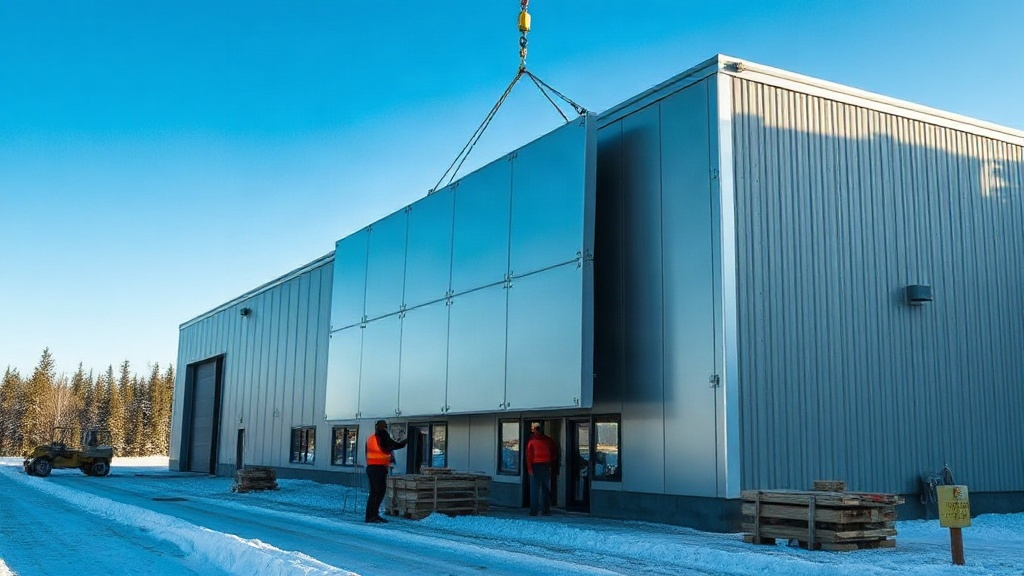
If you're planning a building project in Canada, you've likely encountered sandwich panels. These composite systems have become a staple in modern construction, offering a blend of insulation, structural integrity, and speed. But what makes them particularly suited to the Canadian climate? And how do you choose the right panels for your project? This guide dives into the practical aspects of sandwich panels, drawing on real-world experience and technical know-how to help you make informed decisions.
What Are Sandwich Panels?
At their core, sandwich panels consist of two rigid facings bonded to a lightweight insulating core. The facings are typically made of metal (steel or aluminum), though other materials like fiberglass-reinforced plastic are used in specialized applications. The core is usually rigid foam insulation, such as polyisocyanurate (PIR), polyurethane (PUR), or expanded polystyrene (EPS). This layered construction creates a composite that is strong, lightweight, and highly insulating.
The magic lies in the composite action: the facings carry tensile and compressive stresses, while the core resists shear and provides thermal insulation. This synergy results in panels that can span significant distances without intermediate supports, making them ideal for walls and roofs in industrial, commercial, and even residential buildings.
Why Sandwich Panels Make Sense in Canada
Canada's climate is notoriously harsh, with temperature swings from +30°C in summer to -40°C in winter, not to mention wind, snow, and rain. Buildings must be resilient, energy-efficient, and quick to construct to minimize weather-related delays. Sandwich panels excel on all fronts.
Thermal Performance
The insulating core provides excellent R-values per inch. For instance, a 100 mm PIR panel can achieve an R-value of around R-14, while EPS panels offer about R-4 per inch. This means you can meet stringent energy codes like the National Energy Code of Canada for Buildings (NECB) with relatively thin walls, maximizing interior space.
Moisture and Air Tightness
Canadian buildings face significant moisture challenges, from rain to snow melt and high humidity. Sandwich panels, when properly installed with sealed joints, create a continuous air and vapor barrier. This reduces the risk of condensation within the envelope, a common cause of mold and structural deterioration.
Speed of Construction
With panels arriving prefabricated, installation is fast. A crew can cover hundreds of square meters per day, which is crucial when working in short construction seasons. This speed also reduces labor costs and minimizes exposure to the elements.
Durability and Weather Resistance
The metal facings are typically coated with protective finishes like polyester or PVDF, which resist corrosion, UV degradation, and fading. In coastal areas, where salt spray is a concern, specifying panels with enhanced coatings is advisable.
Types of Sandwich Panels for Canadian Projects
Not all sandwich panels are created equal. The choice depends on your building's function, budget, and performance requirements.
Insulation Core Options
- EPS (Expanded Polystyrene): Cost-effective with decent R-value (R-4 per inch). It's lightweight and easy to work with, but has lower fire performance compared to other cores.
- PIR (Polyisocyanurate): Higher R-value (R-6 to R-6.5 per inch) and better fire resistance. It chars and forms a protective layer when exposed to fire, making it a popular choice for commercial buildings.
- PUR (Polyurethane): Similar to PIR but with slightly lower fire performance. Often used in cold storage applications.
- Mineral Wool: Non-combustible and excellent for fire-rated walls. It has a lower R-value per inch (around R-4) but offers superior acoustic insulation and fire resistance.
Facing Materials
While steel is the most common, you'll also find aluminum and stainless steel facings for corrosive environments. The thickness of the steel (typically 0.5 mm to 0.8 mm) affects structural capacity and durability. For high-wind areas, thicker facings and additional fasteners may be required.
Panel Profiles
Panels come in various profiles: flat, ribbed, micro-ribbed, and corrugated. The profile impacts aesthetics, structural performance, and how joints interlock. Concealed-fix systems offer a cleaner look, while exposed-fix panels are more economical and easier to install.
Installation Best Practices for Canadian Conditions
Proper installation is critical to realizing the benefits of sandwich panels. Here are key considerations tailored to Canada's climate.
Handling Thermal Bridging
Thermal bridging occurs at joints and fasteners, reducing overall insulation effectiveness. Use panels with tongue-and-groove joints and ensure fasteners are thermally broken or use isolation washers. In extreme cold, even small bridges can lead to condensation and energy loss.
Sealing Against Air and Moisture
Apply high-quality sealants compatible with the panel materials. Butyl tapes and silicone sealants are common. Pay attention to penetrations (windows, doors, vents) and ensure proper flashing to direct water away.
Accommodating Thermal Movement
Metal facings expand and contract with temperature changes. Panels should be installed with allowances for movement, especially in long runs. Consult the manufacturer's guidelines for expansion joints and fastener spacing.
Snow Load Considerations
In snow-prone regions, roof panels must be engineered to support snow loads. The panel's span capacity depends on core density, facing thickness, and support spacing. Always verify with a structural engineer.
Cost Analysis: Are Sandwich Panels Worth It?
The upfront cost of sandwich panels can be higher than traditional stick-built walls, but the total installed cost often favors panels due to reduced labor, faster construction, and lower long-term energy costs. On average, you might pay $50 to $150 per square meter for the panels themselves, plus installation. However, savings from simplified foundations, reduced framing, and lower heating bills can offset the initial investment.
For example, a 1,000 m² warehouse in Ontario might save 20-30% on total construction time compared to masonry, translating to significant labor savings. Additionally, energy efficiency improvements can reduce heating costs by 20-40% depending on the baseline.
Common Pitfalls and How to Avoid Them
Even with the best materials, mistakes can happen. Watch out for these issues:
- Improper sealing: Leads to air leakage and moisture ingress. Use trained installers and inspect joints.
- Inadequate structural support: Panels are strong, but they need proper girts and purlins. Follow engineering specs.
- Ignoring thermal movement: Can cause buckling or fastener failure. Allow for expansion and contraction.
- Choosing the wrong core: Using EPS where fire ratings demand PIR or mineral wool can be a costly mistake.
Frequently Asked Questions
How do sandwich panels perform in extreme cold?
They perform well because the insulating core minimizes heat loss and the metal facings resist brittle fracture at low temperatures. However, ensure sealants remain flexible in cold; specify cold-grade sealants.
Can sandwich panels be used for residential homes?
Yes, they are increasingly used in residential construction, especially for additions, garages, and even entire homes. They offer fast build times and high energy efficiency, though aesthetic options may be more limited than traditional siding.
What is the fire rating of sandwich panels?
Fire ratings vary by core material. PIR and mineral wool cores can achieve ratings from 30 minutes to 2 hours. Always check local building codes and choose panels that meet the required fire-resistance rating for your building type.
How long do sandwich panels last?
With proper installation and maintenance, sandwich panels can last 30-50 years or more. The metal facings are durable, and the core retains its insulation properties if kept dry. Regular inspections of seals and fasteners are recommended.
Are sandwich panels environmentally friendly?
They can be. Many manufacturers offer panels with recycled content and low-VOC coatings. The energy efficiency reduces operational carbon, and at end-of-life, metal facings are recyclable. However, the foam core is often not recyclable and may require special disposal.
Making the Right Choice for Your Canadian Project
Sandwich panels offer a compelling solution for Canadian construction, combining thermal efficiency, speed, and durability. By understanding the materials, installation nuances, and cost factors, you can leverage their benefits while avoiding common pitfalls. Whether you're building a warehouse in Alberta or a home in Nova Scotia, the right panel system can make your project more efficient, comfortable, and resilient.
Remember to consult with professionals, check local codes, and source panels from reputable manufacturers with a track record in Canadian conditions. With careful planning, sandwich panels can be a cornerstone of your building's success.