
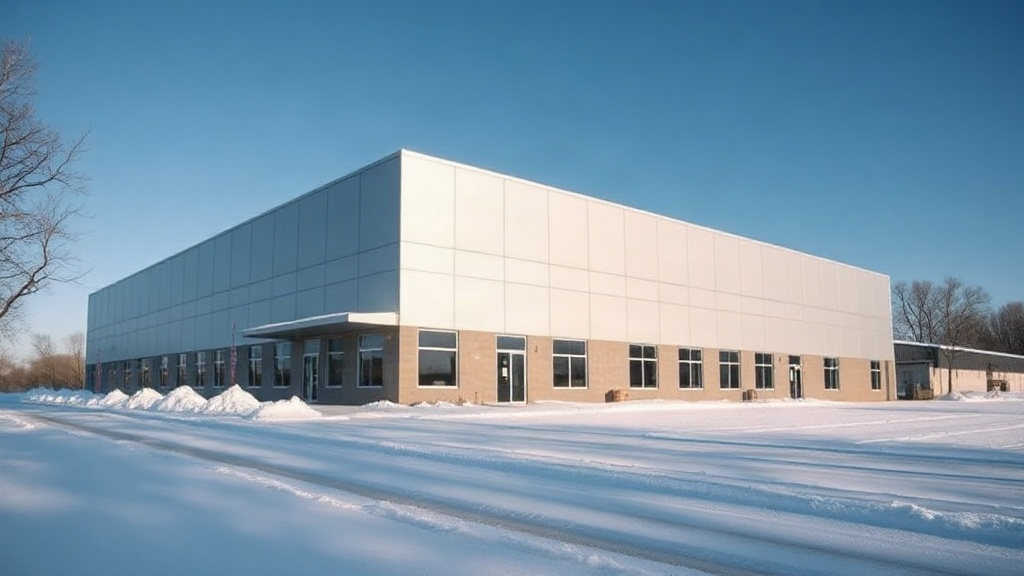
If you've ever watched a Canadian winter throw everything it has at a building envelope, you know that insulation choices are not academic. They decide whether a warehouse in Edmonton stays warm or a cold-storage facility in Halifax keeps its product frozen. Sandwich panels have become a go-to solution for these challenges, but not all panels are created equal, and the details of installation matter as much as the product itself. This guide walks through what you need to know before specifying or installing sandwich panels anywhere in Canada.
What Exactly Is a Sandwich Panel?
A sandwich panel is a composite building element made of two rigid facings bonded to a lightweight insulating core. The facings are typically made of steel, aluminum, or sometimes fiberglass, while the core can be polyurethane (PUR), polyisocyanurate (PIR), expanded polystyrene (EPS), extruded polystyrene (XPS), or mineral wool. The combination creates a product that is strong, lightweight, and highly insulating.
In Canada, these panels are used for walls, roofs, and sometimes floors in industrial, commercial, and agricultural buildings. They are also common in cold storage and food processing facilities, where maintaining precise temperatures is critical.
Why Sandwich Panels Make Sense in Canada
Canada's climate is brutal on buildings. From the damp cold of the Maritimes to the dry, deep freezes of the Prairies, the envelope must handle extreme temperature swings, heavy snow loads, and wind-driven rain. Sandwich panels offer several advantages:
- High R-value per inch: Polyurethane and PIR cores deliver some of the highest insulation values available, which means thinner walls and more usable interior space.
- Fast installation: Panels arrive pre-finished and cut to size, so crews can close in a building quickly, reducing labor costs and exposure to the elements.
- Continuous insulation: Because panels are installed as large units, there are fewer thermal bridges compared to traditional stick-built walls.
- Durability: Steel facings resist moisture, pests, and mold, which is a major concern in humid or coastal regions.
Choosing the Right Core Material
The core you choose affects thermal performance, fire safety, weight, and cost. Here's how the main options stack up for Canadian projects.
EPS (Expanded Polystyrene)
EPS is the most budget-friendly option. It offers decent R-value (around R-4 per inch) and is lightweight, making it easy to handle. However, it has a lower fire rating and can absorb moisture if the facing is damaged. In Canada, EPS panels are often used in agricultural buildings or temporary structures where cost is the primary driver.
PIR (Polyisocyanurate)
PIR panels are the premium choice for high-performance buildings. They provide R-values up to R-6.5 per inch and have better fire resistance than EPS or PUR. PIR also performs well in cold temperatures, maintaining its insulating properties when the mercury drops. For cold storage, refrigerated warehouses, and energy-efficient commercial buildings, PIR is often the default.
Mineral Wool
Mineral wool cores are non-combustible and excel at fire resistance and acoustic insulation. They are heavier and more expensive, and their R-value is lower (around R-4 per inch). However, for buildings that require strict fire codes, such as schools or high-occupancy structures, mineral wool panels can be the only compliant option.
Installation Best Practices for Canadian Climates
Even the best panel won't perform if it's installed poorly. In Canada, moisture management and thermal bridging are the two biggest enemies. Here are key practices to follow.
1. Control Moisture at Every Junction
Water vapor can migrate through walls and condense inside the panel, leading to corrosion and reduced insulation value. Always install a continuous air barrier on the warm side of the insulation. Use vapor-tight tapes and sealants at panel joints, and ensure that flashings are designed to shed water away from the building.
2. Account for Thermal Movement
Steel facings expand and contract with temperature changes. In Canada, where a wall can see a 60°C swing between summer and winter, this movement can be significant. Use slotted holes or oversized fasteners to allow for movement without compromising the seal. Follow the manufacturer's recommendations for fastener spacing and panel engagement.
3. Minimize Thermal Bridging
Fasteners and structural supports can conduct heat right through the panel, creating cold spots where condensation forms. Use thermal breaks, such as nylon washers or composite spacers, between the panel and the structure. For roofs, consider a thermal spacer block over purlins.
4. Handle Snow Loads Properly
In many parts of Canada, roof snow loads can exceed 3 kPa. Ensure that the panel span and support spacing are engineered for the local snow load. Don't rely on generic span tables; get a structural engineer to review your design.
Cost Considerations
Sandwich panels are not cheap, but they can be cost-effective when you factor in speed of construction and energy savings. As a rough guide, installed costs in Canada range from $25 to $60 per square foot, depending on core material, thickness, and project complexity. PIR panels are at the higher end, while EPS is more affordable. Always get multiple quotes and consider the long-term energy savings, especially with rising carbon taxes.
Common Mistakes to Avoid
- Ignoring local building codes: Canadian codes vary by province and municipality. Fire ratings, energy efficiency, and structural requirements differ.
- Using the wrong sealant: Not all sealants adhere well to steel facings. Use non-hardening butyl or silicone sealants recommended by the panel manufacturer.
- Skipping professional installation: While panels are DIY-friendly in theory, mistakes can be costly. Hire experienced installers who understand cold-climate detailing.
- Forgetting about thermal bridging at openings: Doors, windows, and penetrations are common weak points. Insulate and seal them meticulously.
Frequently Asked Questions
What is the best core material for sandwich panels in Canada?
For most commercial and industrial buildings, PIR offers the best balance of thermal performance, fire safety, and durability in Canadian climates. However, if fire codes require non-combustible materials, mineral wool is the way to go. EPS is suitable for budget-conscious projects with lower performance requirements.
Can sandwich panels be used for cold storage in Canada?
Absolutely. PIR and PUR panels are widely used in cold storage because they maintain high R-values at low temperatures and resist moisture. Proper vapor barrier installation is crucial to prevent condensation and ice buildup.
How do sandwich panels handle Canadian snow loads?
They can handle heavy snow loads if properly engineered. The panel span, thickness, and support spacing must be designed for the specific snow load of your location. Always consult a structural engineer.
Are sandwich panels energy-efficient enough for net-zero buildings?
Yes, especially when combined with other efficiency measures. High-performance PIR panels can achieve very low U-values, helping to meet net-zero targets. However, attention to airtightness and thermal bridging is essential.
What maintenance do sandwich panels require?
Minimal. Inspect seals and flashings annually, and repair any damage to the facings promptly to prevent moisture ingress. Cleaning with mild soap and water is usually sufficient.